Muon Detector
How to detect Subatomic particles with a CCD Sensor.
“make something cool."
In May 2017 I started my adventures with the EPFL Rocket Team after a friend of mine asked me if I was interested to join a relatively small and new team of rocketeers. I was struggling in my life as well as in my studies at the time, and this opportunity was the intellectual escape I longed for.
My first meeting with the system engineers of the projects on the EPFL campus went a bit like this:
" You have free reign, build us a cool experiment worth flying on our rocket.”
GREAT.
I started to look for a worthy experiment and, after a while reading dozens of scientific articles, I stumbled uppon an obscure method to try and detect Muons (subatomic particles) using CCD sensors form everyday smartphone cameras. Thus began the arduous process of building the payload. Our goal was to build a custom made muon detector to measure Cosmic showers generated by collisions between cosmic rays and particles of Earth’s atmosphere.
Operating principles
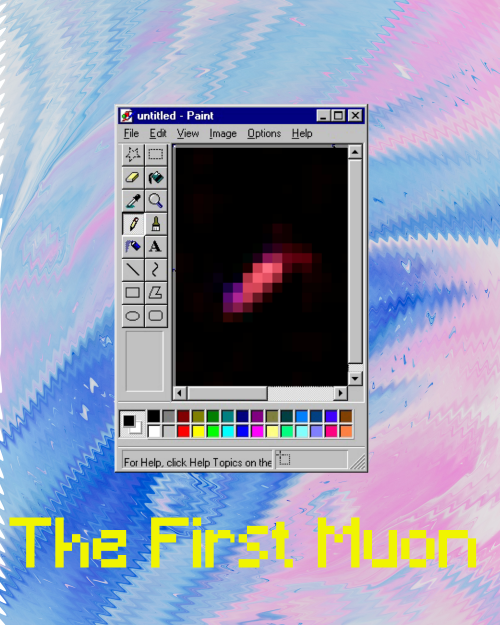
A muon is a particle that carries a charge of -1e and that is similar to an electron. Whenever one of those muon goes through the physical pixels of a ccd array, it lits up ~30 pixels on its path. We then then detect those pixels and compare them using an algorithm.
The method allows to discriminate muons from electrons, as electrons tend to leave a wiggly trace (real scientific jargon, sue me.) resulting from Compton scattering. On the other hand, Muons leave a clean circular or oval shape.
Usually, cameras and CCD/CMOS manufacturers want to mitigate artefacts generated by charged particles passing through their sensor, as they add noise/grain to the images. But in our case, it was wanted. Usually they mitigate it by means of hardware/software filters, therefore we had to find a solution to get a sensor without those pesky systems getting in our ways of muon detecting.
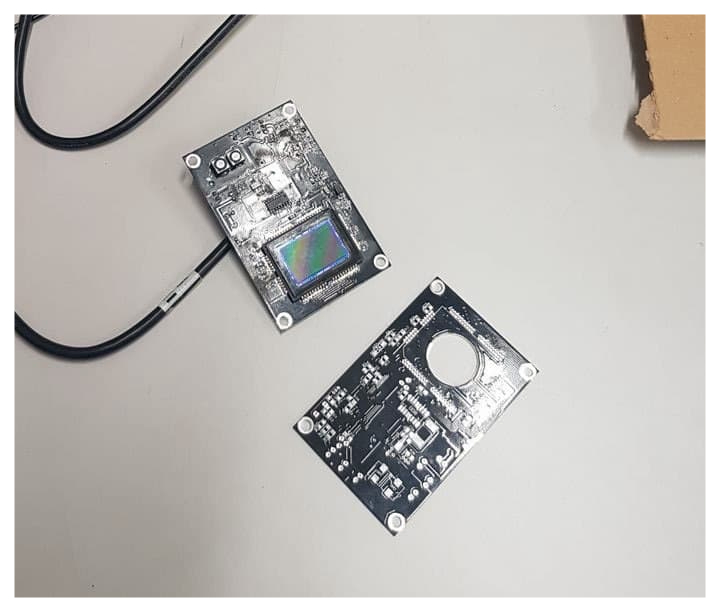
We had to build a custom PCB to mount onto a salvaged CCD sensor from a repurposed (i.e, butchered for science.) reflex camera.